Digital Horizons: Unpacking the Latest Tech Trends

Digital Horizons
Digital Horizons
In the rapidly evolving world of technology, the horizon seems to stretch further each year. What was once a distant dream — artificial intelligence, quantum computing, or immersive digital realities — has now become an integral part of our everyday lives. The digital revolution is not slowing down; it’s accelerating, reshaping industries, economies, and even the way humans perceive reality itself.
The phrase “Digital Horizons” captures this ever-expanding frontier. From AI-powered creativity to sustainable technology, from blockchain-driven finance to smart cities, every breakthrough is redefining the boundaries of what’s possible. This article explores the latest tech trends shaping our digital future — innovations that are transforming business models, consumer experiences, and global connectivity.
Digital Acceleration: Trends for 2025
1. Artificial Intelligence: From Buzzword to Backbone
Artificial Intelligence (AI) is no longer confined to science fiction. It’s the silent engine powering industries across the world — from customer service chatbots to predictive healthcare algorithms. What began as narrow AI, designed to perform specific tasks, has evolved into generative and adaptive intelligence, capable of learning context, creativity, and nuance.
Generative AI and Creative Automation
The rise of Generative AI tools such as ChatGPT, Midjourney, and DALL·E has ushered in a new era of creativity. These models can compose music, design art, write code, and even draft business strategies. Content creation — once a human-only endeavor — is now augmented by algorithms capable of mimicking tone, emotion, and imagination.
This shift is not about replacing creativity but enhancing it. Businesses now use AI to accelerate idea generation, personalize marketing content, and simulate design prototypes. For writers, filmmakers, and artists, AI has become both a collaborator and a challenger — forcing us to redefine what originality means in the digital age.
AI in Decision-Making and Analytics
In the corporate world, AI is transforming decision-making. Predictive analytics models now forecast market trends, optimize supply chains, and detect fraud in milliseconds. Healthcare professionals rely on machine learning to analyze medical images and predict diseases before symptoms appear.
The latest trend, known as Explainable AI (XAI), aims to make these algorithms transparent — allowing humans to understand why a machine made a particular decision. As AI takes on more responsibility in finance, law, and governance, trust and interpretability are becoming just as important as accuracy.
2. The Rise of Quantum Computing
If classical computers changed the world, quantum computing promises to rewrite its foundations. Using qubits — which can represent multiple states simultaneously — quantum machines can process information exponentially faster than traditional systems.
Tech giants like IBM, Google, and Microsoft are racing to achieve “quantum advantage,” a point where quantum computers outperform classical supercomputers in real-world tasks.
Quantum Computing in Practice
While full-scale quantum computers are still emerging, the technology is already being applied in experimental fields:
- Drug discovery: Simulating molecular interactions to accelerate new medical treatments.
- Cybersecurity: Developing next-generation encryption systems resistant to quantum attacks.
- Financial modeling: Solving complex optimization problems in milliseconds.
Quantum computing represents the next great leap in data processing — a horizon where computation becomes not just faster but fundamentally different.
3. The Internet of Things (IoT): When Everything Connects
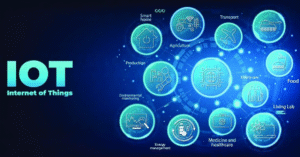
The Internet of Things (IoT) has transformed from a futuristic vision to an everyday reality. Smart thermostats, connected vehicles, wearable health monitors, and industrial sensors are all part of this vast digital ecosystem.
Smart Homes and Everyday Integration
In modern homes, IoT is enhancing comfort and efficiency. Voice assistants control lighting, temperature, and appliances, while smart security systems monitor everything from front doors to power usage. The next wave — Ambient Intelligence — will allow devices to anticipate needs and act autonomously, learning human routines without explicit commands.
Industrial IoT and Smart Manufacturing
In manufacturing, IoT devices power Industry 4.0 — a revolution defined by automation, data analytics, and real-time monitoring. Smart factories use sensors to predict maintenance issues, reduce downtime, and improve quality control. This convergence of IoT, AI, and robotics is creating self-optimizing production environments — the future of industrial efficiency.
4. Blockchain and the Future of Digital Trust
Beyond cryptocurrencies, blockchain technology is redefining digital trust and transparency. It enables secure, tamper-proof transactions across networks — a breakthrough that extends far beyond finance.
Decentralized Finance (DeFi) and Digital Assets
The most visible application of blockchain remains DeFi — a financial system that removes intermediaries and empowers individuals through peer-to-peer transactions. Platforms like Uniswap and Aave allow users to lend, borrow, and trade assets without banks.
Beyond DeFi, tokenization is revolutionizing ownership. Real estate, art, and intellectual property can now be represented as digital tokens, making them divisible, tradable, and globally accessible. This is the democratization of investment, powered by blockchain’s transparency and immutability.
Blockchain in Supply Chains and Governance
Blockchain is also bringing traceability to global supply chains — verifying product origins, ensuring ethical sourcing, and preventing counterfeiting. Governments are adopting distributed ledger systems for identity management, voting systems, and record-keeping.
This technology’s promise is simple yet profound: a decentralized infrastructure of trust that could reshape the foundations of commerce and governance.
5. The Metaverse: Beyond Virtual Reality
While still in its early stages, the Metaverse represents the next evolution of digital interaction — an immersive, persistent virtual world where people can work, play, and socialize using avatars.
Virtual Economies and New Workspaces
Companies like Meta, Microsoft, and Nvidia are building interconnected 3D spaces powered by AR/VR, AI, and blockchain. These worlds host virtual offices, concerts, and marketplaces — forming a new digital economy where goods, identities, and experiences are traded as assets.
Brands are already entering this space. Fashion houses like Gucci and Nike have launched virtual wearables, while architects design virtual real estate in platforms like Decentraland and The Sandbox.
Mixed Reality and Human Experience
The line between physical and digital reality is blurring. Mixed Reality (MR) devices such as Apple Vision Pro and Microsoft HoloLens blend real-world environments with virtual overlays. The result is not escapism but enhanced presence — digital information integrated seamlessly into daily life.
As technology evolves, the Metaverse could become not a replacement for reality but a new layer of it — a digital extension of human interaction.
6. Cybersecurity: Defending a Hyperconnected World
With every technological advance comes a new wave of vulnerabilities. In a world of interconnected devices and decentralized systems, cybersecurity has become a cornerstone of trust.
AI-Powered Threat Detection
Traditional security measures can’t keep up with modern threats. That’s why cybersecurity firms are turning to AI-driven defense systems that detect anomalies and predict attacks before they occur. These tools continuously learn from evolving threat patterns — much like digital immune systems.
Zero Trust Architecture
The new standard in digital defense is Zero Trust — a model that assumes no user or device is trustworthy by default. It continuously verifies every access request, whether inside or outside an organization’s network. Major tech firms like Microsoft and Google have adopted this approach to secure cloud and enterprise environments.
Quantum-Resistant Encryption
As quantum computing grows, traditional encryption may soon become obsolete. The next frontier in cybersecurity is quantum-resistant cryptography — encryption algorithms designed to withstand quantum-level decryption power.
In the future, security will not just protect data; it will predict and adapt to threats in real time.
7. Sustainable Technology: Building a Greener Digital Future
Technology is both a cause and solution to climate change. As the digital economy expands, so does its carbon footprint — from massive data centers to energy-hungry crypto mining. But innovation is paving the way toward sustainable digital transformation.
Green Data Centers and Renewable Energy
Tech giants like Google, Apple, and Amazon are investing in carbon-neutral infrastructure, powered by solar, wind, and hydro energy. Green data centers use advanced cooling techniques, AI optimization, and hardware recycling to reduce energy waste.
Circular Tech Economy
The concept of a circular economy — where electronic devices are recycled, refurbished, and repurposed — is gaining traction. Companies are developing biodegradable circuit boards, modular smartphones, and low-impact production methods.
Tech for Environmental Monitoring
IoT sensors, drones, and satellite imaging now play critical roles in environmental conservation. From tracking deforestation to predicting weather anomalies, technology is giving scientists real-time visibility into the planet’s health — and the ability to act faster.
8. The Future of Work: Automation, Flexibility, and Human-AI Collaboration
The digital age is transforming not just what we do, but how we work. Automation, remote collaboration, and AI-powered workflows are creating a hybrid future of work — one that blends human intuition with machine precision.
Automation and Productivity
AI and robotics are automating routine tasks across industries. From automated logistics to virtual assistants handling customer queries, the future workforce will focus less on repetition and more on creativity and strategy.
The Remote Work Revolution
The pandemic accelerated the rise of remote and hybrid work models, powered by digital platforms like Zoom, Slack, and Microsoft Teams. Now, with the emergence of virtual offices and AI productivity tools, geography is becoming irrelevant to collaboration.
Human-AI Synergy
Rather than replacing jobs, AI is increasingly becoming a collaborative partner. The future workplace will rely on human creativity complemented by AI efficiency — where empathy, ethics, and innovation remain uniquely human strengths.
9. 5G and the Next Era of Connectivity
Connectivity lies at the core of all technological progress. The rollout of 5G networks — and future 6G systems — is enabling ultra-fast communication, powering everything from autonomous vehicles to smart cities.
Faster, Smarter, More Connected
5G’s low latency and high bandwidth allow billions of devices to interact simultaneously. This paves the way for real-time remote surgery, driverless transportation, and immersive AR/VR experiences.
The Road to 6G
While 5G continues to expand, researchers are already developing 6G, promising speeds 100 times faster and integrating AI directly into network architecture. This will unlock applications we can barely imagine today — from holographic communication to fully autonomous city grids.
10. Ethics and Regulation in the Digital Age
As technology evolves, so must our values. The next frontier of innovation is not purely technical — it’s ethical. Governments, corporations, and citizens are grappling with questions about privacy, bias, accountability, and the societal impact of automation.
AI Ethics and Accountability
How do we ensure AI remains fair, unbiased, and transparent? Global initiatives are emerging to define AI ethics frameworks, requiring companies to disclose data sources and algorithmic decision-making processes.
Data Privacy and Digital Rights
With data becoming the world’s most valuable commodity, privacy has become a civil right. Regulations like GDPR in Europe and CCPA in California are setting global standards for how personal data is collected, stored, and used.
The challenge ahead is to balance innovation with responsibility — ensuring that progress serves humanity, not the other way around.
Conclusion: Navigating the Digital Horizon
The digital horizon is not a fixed destination — it’s a living frontier that evolves with every innovation. Artificial intelligence, blockchain, quantum computing, and sustainable tech are converging to shape a future where human creativity meets machine intelligence.
But amid this rapid transformation, one truth remains constant: technology reflects humanity. Its potential for good or harm depends on how we choose to build, regulate, and integrate it into society.
As we step into this new era, understanding these latest tech trends isn’t just about staying informed — it’s about shaping the digital world we want to live in. The horizon is vast, the pace is relentless, and the possibilities are endless. Our task is to navigate it wisely.